

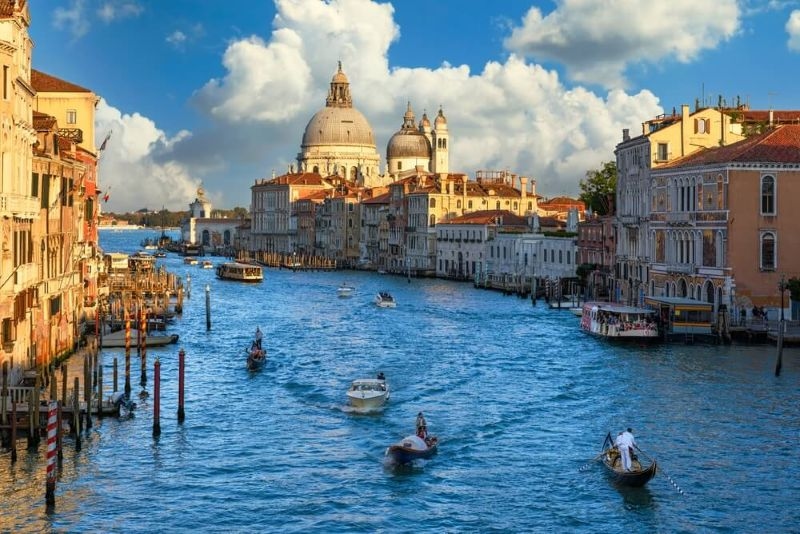
Venice's canals make the city feel unreal yet very real at once, with water replacing roads and boats taking the place of cars almost everywhere. From the first walk near the water, the Venice canals show how history still moves today. A gondola ride in Venice is often the first memory people keep, and plans quickly grow to include a visit to Murano and the colorful houses of Burano. Hidden Venice islands sit nearby and are often skipped by rushed crowds, which is why Venice travel tips matter early, before confusion builds.
The city of Venice works because water guides it. Every canal links trade, homes, and faith across centuries, and understanding Venice canals makes each turn feel less lost and more calm.
Venice canals were never random paths. They were planned slowly with skill and patience, using wooden piles driven deep into soft ground to support heavy stone buildings. Salt water helped preserve the wood over time, which sounds strange but proved effective.
Land was marshy and unreliable, so water travel made moving goods easier and safer. Canals allowed boats to reach homes, churches, and markets without the need for solid roads.
Key roles of the Venice canals include
Venice canals still perform these same roles today with very little change.
A gondola ride in Venice is not only about photos. It reflects how locals once traveled daily, long before engines existed. Gondolas served as family transport and social space on water.
The boat glides effortlessly through the narrow, winding paths of Venice. The smaller canals are small, seem private, and are soft; the houses are very close together and exhibit signs of age, which tell us stories of their history.
As you are riding in a gondola, there are often many views of Venice from a gondola, including
Taking a gondola ride provides visitors with a different view of Venice than viewing it from above.
A visit to Murano Island brings a calmer mood than the central city. The island sits close yet feels removed, shaped by centuries of glassmaking.
The island of Murano became famous for glass art when furnaces were moved here to protect Venice from fire. Skills stayed secret for generations, shaping both economy and identity.
Venice canals connect Murano closely to the central city, and water buses run frequently, making Murano Island easy to fit into a half-day plan.
Burano's colorful houses stand out immediately, with bright walls lining canals like painted toys. These colors helped fishermen find their way home during heavy fog and storms.
The island of Burano feels cheerful and straightforward, with lace-making adding another layer of tradition.
Burano's colorful houses create a strong visual contrast and lift the mood. Life moves more slowly, and canals feel wider and calmer than in central Venice.
Visitors often notice
'The colorful houses of Burano follow strict rules, and homeowners must use only approved shades.
The hidden islands of Venice are beyond traditional routes and provide a relaxing, spacious environment. Many travelers never experience these islands because they only go to well-known places.
Examples of hidden islands in Venice:
These islands connect via canals and paths in the lagoon back to Venice, offering a different way to experience the quieter side of Italian culture and ways of life.
Crowds decrease quickly; sound shifts from loud to waterbird sounds; history seems more accessible and less preplanned. To truly experience the Hidden Venice Islands, you must plan more carefully and be more patient.
Venice travel tips help avoid small mistakes that frustrate first-time visitors. The city layout can be confusing quickly, and signs often point in unclear directions.
Helpful Venice travel tips include
Venice canals cause streets to end suddenly, and bridges can add long detours. Comfortable shoes matter more than maps. Venice travel tips also include visiting early or late in the day, since midday crowds bring noise and rush.
Food arrives by boat in Venice, shaping daily meals and market rhythms. Small boats deliver produce early, and fish stays central in local cooking. Canals act like moving sidewalks, allowing restaurants to receive supplies quietly.
This system still works because the Venetian canals support it, and modern trucks cannot fully replace boats in such a setting.
At night, water reflects light softly, and sounds fade quickly. Walking near the Venice canals after dark feels calm, with gondolas moving more slowly and locals reclaiming public spaces. This time shows the city without rush, where the Venice canals feel like living veins again.
Water is essential to the city's survival and simultaneously poses a danger to it. The destruction caused by flooding is gradual, and the maintenance of buildings would be continuous; therefore, preservation efforts aim to balance funding preservation through tourism with the impact of increased use of the buildings.
Venice canals guide every story in the city, connecting island visits, gondola rides, and quiet paths through water. Planning with care reveals beauty beyond crowds, and slow travel always wins here. Water teaches patience in Venice.
Walking, combined with short boat rides, works best, showing both detail and scale.
Yes, it helps understand tradition and hidden canals, and shared rides lower the price.
Three to four hours fits well, allowing time for glass workshops and walking.
Yes, water buses run regularly from Venice, and the ride adds to the experience.
This content was created by AI