

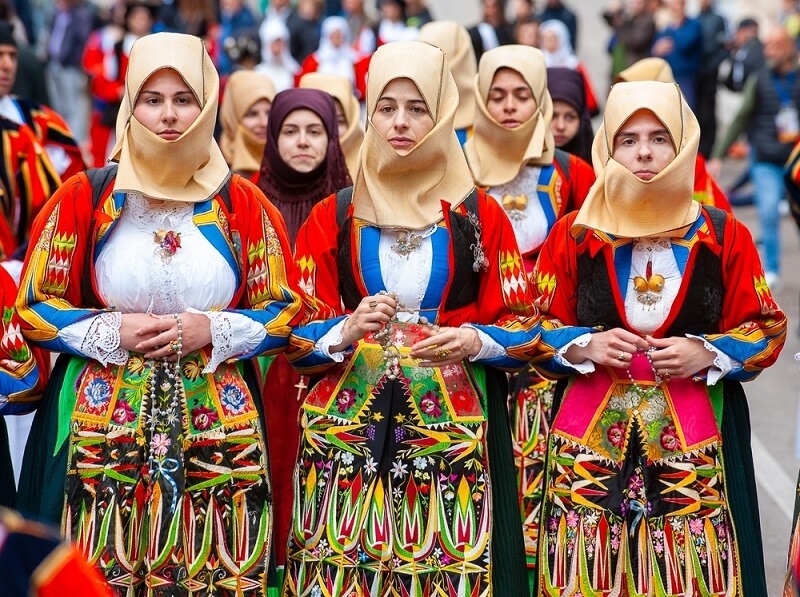
Italy is a country where we see tradition alive through every church bell, every piazza and every candlelit procession in celebration. Each traditional Italian festival is not just an event, but also a living representation of the many regional festivals celebrated throughout Italy. Each festival has its roots in historical Italian celebrations and has developed through the influence of centuries of different Italian cultural traditions. All traditional Italian festivals, whether full of vibrant parades or solemn religious ceremonies, reflect who Italians are through their identity as a nation, artistry, and pride as a community.
As you learn about the many famous Sicilian festivals or the rich history of the Venice Carnival, know that you are deeply immersed in true Italian culture and that the traditional Italian festival you are celebrating will continue to shape Italy's cultural legacy for many years to come.
The Italian tradition of celebrating festivals is extensive and has helped maintain and promote Italian culture across many generations. These festivals are not just events; they are community celebrations based on faith, folklore, and historical events.
Religious aspects play a key role in many of these historic Italian celebrations; many originated from Catholic religious traditions. This shows the importance of the Catholic Church in regard to Italy's culture and the religious predominance of Vatican City. Examples of how regional festivals in Italy combine religion and artistry include patron saint festivals, Easter processions, and Christmas reenactments of the nativity.
In places like Florence and Naples, local saints are often celebrated each year with special festivals featuring elaborate ceremonies, fireworks, and large community dinners. The traditional Italian festivals preserve sacred traditions that date back to before Christ and continue to evolve to appeal to today's generation.
Every region of Italy has its own unique customs; the North puts on medieval re-enactments for a taste of Renaissance style, while the South features more dramatic religious celebrations. All these different kinds of celebrations represent what regional festivals are all about in Italy: showcasing each region's unique dialect, local food, and clothing.
Italian cultural traditions are safeguarded by multiple institutions, including UNESCO, which documents intangible cultural heritage practices worldwide. Many historical festivals in Italy reflect centuries-old craftsmanship, including mask-making, candle-making, and other crafts, and their existence adds to the prestige of traditional Italian festivals worldwide.
One of the many ways in which regional festivals across Italy showcase their diversity is through how each community interacts with its own past. Each town's celebration creates a unique memory that contributes to a greater collection of memories across all regions.
The Carnival of Venice is just one example of an internationally recognized Italian festival. The history of the Carnival of Venice can be traced back to the 12th century, when masked participants celebrated the last time before Lent began. By wearing extravagant clothing and masks, individuals could participate in celebrations regardless of class distinctions.
Today, the history of the Venice Carnival remains of interest to travelers, who can attend grand balls in historic palaces, view performances on stage, or take part in gondola parades throughout the historic districts. The Carnival of Venice is widely viewed as one of the most upscale historic Italian festivals and is considered one of the oldest in Italian culture.
Sicily is known for both spirituality and circumstance, with incredibly rich cultural traditions. Sicily has celebrated many famous festivals, celebrating both religion and spectacle.
One of Sicily's better-known festivals is the Feast of St. Agatha, held in Catania, where thousands of participants march through candlelit streets, accompanied by fireworks and dressed in traditional Sicilian costumes. Famous festivals in Sicily also showcase the unique mix of cultures that has developed over more than 2,000 years. Greeks, Romans, Arabs, and Normans have all left their mark on the island, as evidenced by the way each culture is celebrated during famous festivals in Sicily.
Another famous festival in Sicily is the elaborate reenactments held at Easter. Many Italians attend and create elaborate recreations of famous Italian celebrations. It is through these famous festivals in Sicily that people celebrate and share their love for their culture.
Historic Italian celebrations typically mark victories, religious miracles, and intercity rivalries from the Medieval Ages and provide people within a community the opportunity to honour their ancestral heritage and learn from history through oral tradition.
The Palio is a historical horse race that serves as an example of Medieval competition between neighbouring cities and villages, specifically the city of Siena (where it takes place). The Palio is representative of how traditional Italian festival events help preserve the civic identity of communities.
Examples of regional festivals in Italy are: re-enactments of ancient battles, Renaissance tournaments, and Folklore legends. These forms of modern Italian cultural tradition represent continuing ties to local pride in the respective regions of Italy.
Culinary heritage is critical to understanding festival exploration as part of Italy's traditional celebrations, and food festivals celebrating olive oils, truffles, wines, and local cheeses can be found throughout Italy and are integral to Italian culture, which combines communal dining with aesthetics.
The inclusion of music in celebration is also essential in Italian culture. Different regions feature different types of music, such as classical orchestras and folk musicians randomly assigned to perform at local festivals, providing a wide range of soundscapes that allow festivals in Italy to be fully experienced through the senses.
Traditional Italian festivals are still evolving despite their roots in history. The growth of tourism has sparked worldwide interest in Italy’s regional festivals, particularly the history of the Venice Carnival and the well-known festivals in Sicily.
The communities that host these festivals strive to remain authentic to their heritage through regulations set by local governments and cultural organizations that oversee the events. Therefore, Italian traditions are preserved while welcoming visitors from other countries.
Thanks to digital platforms and social media, the world can now see these celebrations unfold in real time. Even though Italy has historically had a stronger claim to the celebrations than most other countries, Italian festivals continue to share the following unifying elements: unity, faith, and joy within their respective communities.
Traditional Italian festivals are among the many connections to the past in a rapidly modernizing world and still represent a sense of identity and belonging to a community.
Festival demonstrating how communities in Italy have preserved their languages, foods, crafts, and traditions through regional Italian festivals, and by using these festivals to honour historic Italian cultures built through centuries of perseverance and faith.
When visitors learn about the history of Venice’s Carnival, or experience famous festivals such as those in Sicily, they can appreciate more than just a spectacle—they can see an aspect of living cultural heritage.
Ultimately, the reason that Italian culture will endure is that these celebrations are celebrated, appreciated, and passed down with dedication. Traditional Italian festivals are alive and well within Italy's ancient cities, and as long as church bells ring throughout these cities, these festivals will continue to reflect Italy's cultural spirit.
Italy's Festivals showcase regional cuisine, elaborate costumes, public displays of Religion, and community involvement, bringing everyone in the area together to preserve cultural traditions over time.
Venice Carnival has a long history dating back to 12 century, representing the celebration before Lent and the social order of Venice due to the use of masquerade and has become one of the best-known historical events in Italy.
Numerous Religious Festivals held in Sicily express great devotion for their faith community and are represented by both ceremonial public displays using dramatic public processions with fireworks, represent multiple historical influences and their vibrant culture exists through generations.
This content was created by AI