

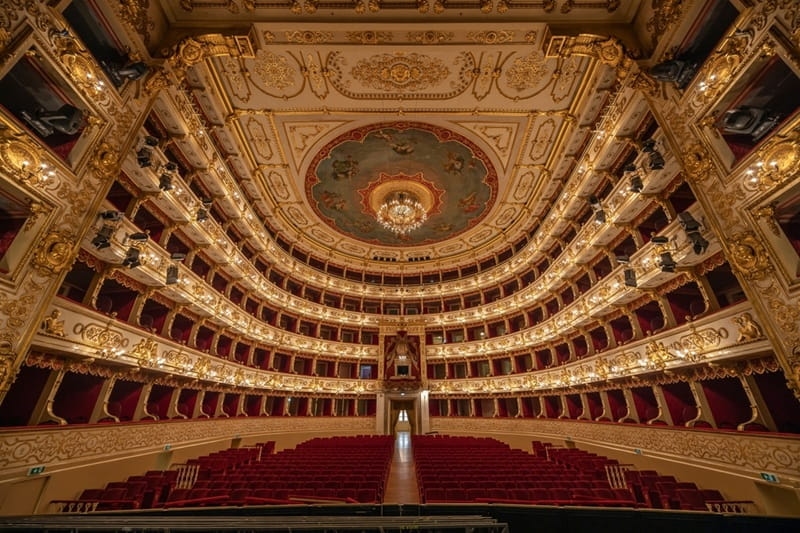
There is a funny thing about opera. People love to say it is “not for them,” right up until they hear a big aria in a movie scene and suddenly get goosebumps. Or they catch a reel of a soprano hitting a note that feels like it could crack a window. Then they pause. Then they lean in. That reaction is not random. It is proof that opera still lives inside modern music culture, even when listeners do not call it opera.
That is the core of Italian opera influence today. It is not locked in velvet seats and chandelier-lit halls. It travels. It sneaks into film scores, Broadway ballads, stadium pop, and even the way vocal coaches teach breath control. It shaped what audiences expect music to do: tell a story, raise the stakes, and make emotion feel physical.
So how did Italy’s operatic tradition become this global blueprint? And why does it still matter in 2026, when people can skip songs after five seconds?
The simplest answer is that opera trained the world to listen for drama. Not just rhythm. Not just melody. Drama.
Opera turned music into a full-body experience. Characters do not just sing; they plead, threaten, flirt, mourn, and collapse in real time. That emotional intensity became a reference point for other genres. If a pop singer “belts,” if a musical theater lead holds a note to break the audience, if a film composer builds a swelling climax, those instincts trace back to operatic storytelling.
The second reason is technique. Opera developed a gold-standard approach to the human voice: projection without microphones, sustained phrasing, dynamic contrast, and precision. Even singers who never step into an opera house still benefit from methods shaped by centuries of operatic practice.
And yes, there is also prestige. Opera signaled cultural power for a long time. That aura still lingers, which is why commercials use opera to suggest luxury, movies use it to signal tragedy or grandeur, and artists borrow it to sound timeless.
To understand why this art form traveled so far, it helps to revisit the history of Italian opera without turning it into a dusty lecture.
Opera’s roots go back to late Renaissance and early Baroque experiments, when composers tried to recreate what they believed ancient Greek drama sounded like. Italy became the testing ground. Then it became the standard setter. By the 1600s and 1700s, opera houses popped up, composers refined the form, and audiences developed a taste for grand voices and unforgettable melodies.
Here is the big twist: opera was never only for elites. In places like Venice, opera became a public entertainment business. People bought tickets, debated singers, obsessed over premieres, and treated composers like celebrities. That energy helped opera spread across Europe and beyond.
Once opera became a public obsession, other countries imported the style, adapted it, and built their own traditions. But the Italian model stayed foundational. Even when languages changed, the musical DNA remained.
When people talk about opera’s reach, they often point to the giants. Fair. The list of famous Italian opera composersreads like a greatest-hits lineup of emotional impact.
Verdi gave opera its political pulse and its unforgettable choruses. Puccini perfected the tear-jerking, cinematic arc long before cinema dominated storytelling. Rossini brought speed, sparkle, and comedic timing that still shows up in modern musical theater. Donizetti and Bellini shaped melody and vocal line in ways singers still chase today.
What made these composers so exportable was clarity. Their music communicates even if a listener does not understand Italian. The emotions land anyway. The tension reads anyway. The release feels earned anyway.
That accessibility is why their work became a global reference point. It is also why modern creators keep borrowing from them. Some do it openly through adaptations. Others do it unconsciously through the way they build a musical climax.
People sometimes imagine opera houses as museums. Quiet, respectful, frozen in time. Not quite.
The opera houses in Italy are more like living engines. They preserve tradition, sure, but they also keep performance culture sharp. These venues have long histories of demanding audiences, strong criticism, and high expectations. That pressure creates excellence, and excellence creates influence.
Opera houses also act as training grounds. Young singers learn what it means to carry a role for three hours. Conductors learn how to shape drama through pacing. Directors experiment with staging that can modernize old stories without losing their emotional truth.
And because Italy attracts global talent, these venues are not only “Italian” in practice. They are international meeting points where styles mix, standards rise, and new interpretations travel outward.
Few names carry as much symbolic weight as La Scala. La Scala performances Milan are not just shows; they are events. They signal legitimacy. They attract attention from critics, artists, and opera fans worldwide.
La Scala’s influence is not only about prestige. It is about the way it sets the tone. Productions staged there often shape how people interpret a work for years. A standout cast, a daring director, or a remarkable conductor can spark ripple effects across global opera seasons.
Even outside opera circles, La Scala acts as a cultural shorthand. Mention it and people think of excellence, drama, and old-world artistry. That association feeds opera’s broader influence on branding, fashion, cinema, and music identity.
And here is a more casual truth: people who have never watched an opera still recognize the name La Scala. That is cultural reach.
Opera has not stayed stuck in the past. Not in Italy, and not globally. modern opera performances Italy increasingly experiment with staging, pacing, and visual language.
Some productions set classic stories in modern cities. Others use multimedia projections, minimalist sets, or choreography that feels closer to contemporary theater. There are also new operas written today, exploring modern topics: migration, politics, technology, identity, climate anxiety. Real life, basically.
This matters because opera stays influential when it stays relevant. When audiences see themselves in the stories, they keep showing up. And when they keep showing up, opera continues to shape expectations for live performance as an art form that can still hit hard.
The result is a loop: modern stagings breathe new life into classic works, and that new life keeps opera visible in the wider culture.
Here is where things get fun. Opera influence shows up in places people do not expect.
Pop music borrows operatic gestures all the time: the big chorus lift, the dramatic key change, the “this is the emotional peak” long note. Some artists even blend operatic vocals directly with pop production. The shock value works, but the emotional value works more.
Film scores use operatic logic constantly. Leitmotifs. Swells. Orchestral tension. Vocal colors that suggest grief or triumph. A lot of blockbuster scoring is basically opera without staging. Same emotional architecture.
Musical theater, especially the more dramatic modern shows, owes a lot to opera’s storytelling approach. Character themes, sung-through structures, heightened emotion, and the sense that music carries the plot rather than decorating it. Opera helped teach the world that music can be narrative, not just soundtrack.
And underneath all of that, technique remains. Vocal pedagogy, breath support, resonance. Even if someone is training to sing rock or R&B, they often borrow principles that opera refined.
So why does it still matter now? Because modern music culture is crowded. There is endless content. The stuff that breaks through tends to be emotionally unmistakable. Opera has always been emotionally unmistakable.
Also, live performance is having a moment again. People crave experiences that feel real. Opera offers that in a high-stakes way. No edits. No second takes. Just a human voice in a room, pushing emotion across space.
And when listeners feel that kind of intensity, they bring that expectation back into other music. They want storytelling. They want authenticity. They want the kind of moment that makes them sit up straight.
That is why Italian opera influence continues. It is not only a genre. It is a template for emotional communication.
The history of Italian opera created a vocabulary the world keeps using. famous Italian opera composers gave the vocabulary unforgettable melodies and characters. The opera houses in Italy kept standards high and interpretations fresh. La Scala performances Milan amplified the art form’s global visibility. And modern opera performances Italyensure opera remains a living conversation, not a preserved artifact.
That is the full picture. Italy built a musical language of drama and beauty, and the world never stopped speaking it.
Opera shaped how music communicates emotion through melody, vocal technique, and dramatic structure. Those elements appear in film scoring, pop ballads, and musical theater.
Their works combine strong storytelling with melodies that communicate across language barriers. That is why many famous Italian opera composers remain central to global repertoire.
Yes. Many modern opera performances Italy update staging, use new visual approaches, and program contemporary themes, while still honoring classical technique and music.
This content was created by AI