

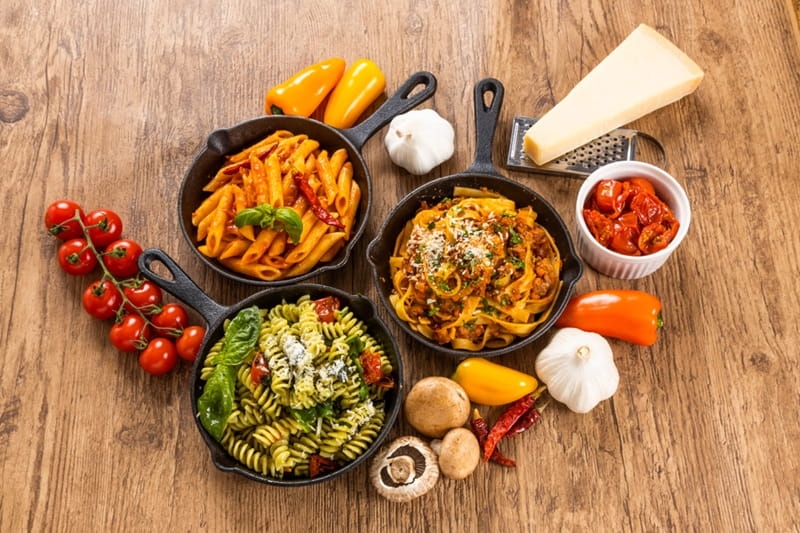
Before we wander through Italy’s pasta map, here’s a quick look at what’s ahead. We’ll travel region by region, tasting the heart of regional Italian pasta dishes that locals still cook at home. You’ll meet pasta varieties in Italy that feel familiar yet surprisingly new. We’ll talk about handmade pasta techniques passed down through generations, explore famous pasta from Rome, and savor authentic Italian pasta sauces that turn simple flour and water into something unforgettable. If you love food, especially carbs with character, this one’s for you.
Italy isn’t just one cuisine. It’s a patchwork of flavors shaped by climate, history, and grandma’s preferences. The regional Italian pasta dishes you’ll find in the north are rich and buttery. In the south, they’re bold and sun-soaked.
Up north, cooler weather calls for hearty plates. Think butter, cream, slow braises, and egg-based pasta dough.
One standout is Tagliatelle al Ragù from Bologna.
Tagliatelle Al Ragù
Ingredients
Step-by-Step Method
Here’s the thing. In the US, we often call this spaghetti bolognese. But in Bologna, they rarely use spaghetti. It’s tagliatelle, always. That wide ribbon holds sauce like a warm hug.
In regions like Piedmont and Lombardy, stuffed pasta takes center stage. The dough is tender. The fillings are earthy.
Agnolotti Del Plin
Ingredients
Step-by-Step Method
The name plin means pinch. That tiny pinch seals the filling. These handmade pasta techniques matter. They’re not fussy. They’re precise, like tying a good knot.
Now, as we move south, the flavors change. And you can taste the sunshine.
Central Italy, especially Rome, is pasta heaven. The famous pasta from Rome relies on a few ingredients. But don’t let that fool you. Simple doesn’t mean boring.
Cacio e pepe is proof that authentic Italian pasta sauces can be minimal and still powerful.
Ingredients
Step-by-Step Method
That’s it. No cream. No garlic. Just cheese and pepper. And yet, it feels luxurious. Honestly, when done right, it rivals any rich Alfredo you’ve had.
Let’s clear something up. Real carbonara does not use cream. It’s eggs, cheese, pork, and pasta. Period.
Ingredients
Step-by-Step Method
The heat of the pasta cooks the eggs gently. The result is glossy, not scrambled. It’s a bit nerve-racking the first time. But once you nail it, you’ll feel like a Roman nonna.
And yes, these are traditional pasta recipes. They’ve stood the test of time for a reason.
As we head south, tomatoes get sweeter, olive oil flows freely, and seafood steps in. The pasta varieties in Italy shift, too. You’ll see shapes like orecchiette and trofie that catch chunky sauces beautifully.
From Puglia, this dish balances bitter greens with savory depth.
Ingredients
Step-by-Step Method
The little ear-shaped pasta cradles the sauce. It’s rustic and bold. You know what? It tastes like a seaside afternoon.
This one is pure comfort with a hint of drama.
Ingredients
Step-by-Step Method
Sweet tomatoes, creamy cheese, silky eggplant. It’s generous. It’s southern. And it’s one of those traditional pasta recipes that feels like Sunday dinner at grandma’s house.
Let’s pause for a second. Ever wonder why there are so many shapes? It’s not just for fun.
Different pasta varieties in Italy exist for specific sauces. Long strands suit smooth sauces. Tubes trap chunky ragù. Tiny shapes work in soups.
A few examples
It’s like choosing the right vehicle for the road. You wouldn’t take a sports car off-roading, right? Same logic.
And when you make pasta from scratch, those handmade pasta techniques really shine. Roll the dough thin, cut ribbons evenly, and shape little ears with your thumb. It’s tactile. Almost meditative.
Regional Italian pasta dishes are more than meals. They’re reflections of landscape, culture, and family. From the rich ragù of the north to the peppery simplicity of Rome and the tomato-kissed plates of the south, each region tells a different story through pasta.
And the beauty is this. You don’t have to be in Italy to taste it. With the right ingredients and a little patience, you can recreate these traditional pasta recipes at home. You’ll learn why certain pasta varieties in Italy pair with certain sauces.
Italian versions focus on fewer ingredients and stronger flavors. American versions often add cream, extra spices, or larger portions.
Not at all. Most use simple ingredients and clear steps. The key is timing and quality, not complexity.
Carbonara, cacio e pepe, and amatriciana are among the most famous pastas from Rome, known for bold yet simple flavors.
Each shape matches a specific sauce style. The design helps the sauce cling better and improves texture in every bite.
This content was created by AI