

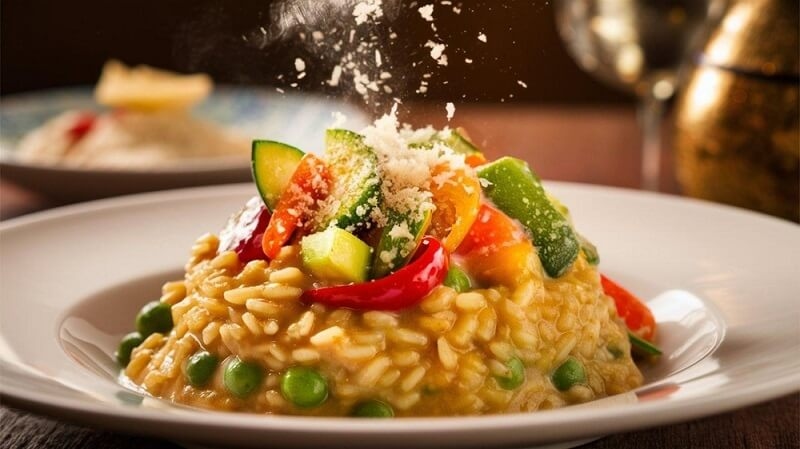
A traditional risotto recipe is one of the most beloved parts of Northern Italian cuisine, bringing comfort with every spoonful. This dish connects deeply with authentic Italian rice dishes and shows why risotto alla Milanese became famous. With proper Arborio rice cooking tips and creamy risotto techniques, simple grains turn into something special that feels rich and warm.
Risotto feels easy at first glance, yet every step carries meaning. Each stir helps build texture, and each ingredient adds story. This guide explains traditions, methods, and creative ways while keeping the heart of this classic alive.
Rice arrived in Northern Italy centuries ago, especially in wet regions like Lombardy and Piedmont. Farmers noticed that rice grew well in flooded fields, and it slowly became a staple food.
Unlike boiled rice, a traditional risotto recipe uses slow cooking. This method lets rice release its starch, creating a creamy body without cream. This small detail forever shaped authentic Italian rice dishes.
Families passed recipes down quietly. Grandparents taught children patience, because risotto cannot be rushed. That lesson still matters today.
Risotto alla Milanese holds strong cultural value. Its golden color comes from saffron, a spice once worth more than gold.
Important reasons for its fame include
Risotto alla Milanese also proves how a traditional risotto recipe can carry pride, not just taste.
Every ingredient has a purpose. Nothing gets added by accident.
Arborio rice stays at the center of authentic Italian rice dishes. Its round grains hold starch perfectly.
Key Arborio rice cooking tips include
These are the tips for cooking Arborio rice. They help in the slow release of starch, which creates a natural creaminess.
Other types of rice, such as Carnaroli, can also be used. However, the most popular type of rice in many households is still the Arborio.
Broth gives flavor layer by layer. Chicken broth is often used, though vegetable broth also works well.
Warm broth matters. Cold broth interrupts cooking and harms texture.
Parmigiano Reggiano gives salt, umami, and softness. This cheese blends smoothly and supports creamy risotto techniques without overpowering rice.
Creaminess defines a successful traditional risotto recipe. This texture is made with starch, not heavy cream.
Many beginners misunderstand this point.
Liquid enters step by step, not all at once. This process allows rice to absorb properly.
Important creamy risotto techniques include
These creamy risotto techniques shape the famous silky texture.
Stirring helps grains rub together. That friction releases starch naturally.
Too much stirring breaks grains, but too little prevents creaminess.
Balance matters more than speed.
This simple breakdown helps beginners understand clearly.
Ingredients needed
Small diced onion cooks first in butter. This base builds aroma.
Rice is added to the pan and toasted briefly. This step locks the structure.
Then broth enters slowly. Stirring continues while rice softens.
Cooking takes about 18 to 20 minutes.
Cheese and butter get added last. This step, called mantecatura, finishes the texture.
This final movement defines a proper traditional risotto recipe.
Northern Italy cuisine contains many risotto variations. Each place changes small details, but keeps the core method.
Popular regional examples include
These variations prove that authentic Italian rice dishes adapt without losing identity.
Climate and local farming naturally shaped each version.
Mistakes happen often, especially with beginners. Knowing the right Arborio rice-cooking tips prevents disappointment.
Long-grain rice cannot release enough starch. The result feels dry instead of creamy.
Always choose proper risotto rice.
Flooding rice prevents gradual absorption.
Correct Arborio rice cooking tips recommend patience instead.
Risotto should stay slightly firm inside. Italians call this texture al dente.
Soft mush ruins the structure completely.
Expensive ingredients cannot fix bad technique. Method controls the final result more than price.
Creamy risotto techniques help create
Even simple ingredients shine when the technique stays correct.
This truth explains why traditional cooks focus more on process than luxury.
Chefs today experiment carefully. They respect roots while adding creativity.
Creative ideas include
These versions still follow creamy risotto techniques. Without a proper method, creativity fails.
Innovation works best when tradition is respected.
Risotto represents more than food. It reflects patience, care, and family.
In many homes, Sunday lunch includes a traditional risotto recipe. Everyone waits near the kitchen, watching and talking.
This shared moment builds connection.
Authentic Italian rice dishes also show respect for ingredients. Nothing gets wasted. Every grain matters.
That mindset teaches responsibility and appreciation.
Risotto alla Milanese remains one of the purest examples of balance.
Saffron adds gentle bitterness and aroma. Butter and cheese soften that edge.
This contrast creates harmony.
Important lessons from risotto alla Milanese include
Because of this, risotto alla Milanese continues inspiring chefs worldwide.
Serving matters almost as much as cooking.
Useful tips include
These small actions protect creamy risotto techniques and maintain quality.
Waiting too long makes risotto dry and sticky.
A traditional risotto recipe provides energy and comfort. Rice supplies carbohydrates, which fuel the body and brain.
Cheese adds protein and calcium.
When vegetables are included, nutrition improves even more.
Portion control still matters. Balance keeps a meal healthy.
Risotto fits well into balanced eating when prepared thoughtfully.
Northern Italian cuisine shaped many global kitchens. Risotto techniques appear in restaurants everywhere now.
The reason stays simple.
This cuisine respects ingredients and process.
Chefs value
These lessons apply far beyond Italy.
Traditional risotto recipe teaching continues to guide modern chefs daily.
The traditional recipe for risotto is still a symbol of Northern Italian cuisine and Italian rice dishes. The right tips on how to cook Arborio rice and make creamy risotto guarantee perfect results. Classic risotto alla Milanese or new variations – this dish still brings comfort and tradition to every table with pride and care.
A traditional risotto recipe cooks slowly with broth added step by step. This releases starch, creating a creamy texture. Regular rice gets boiled quickly and does not develop the same richness.
Arborio rice contains high starch content. These starches create natural creaminess. Proper Arborio rice cooking tips help achieve the correct texture without adding cream.
Saffron defines risotto alla Milanese. Without it, the dish loses its signature flavor and color. The result is regular risotto rather than the authentic version.
The most important techniques for creamy risotto include slow broth addition, steady stirring, and finishing with butter and cheese. These steps create the famous smooth texture.
This content was created by AI