

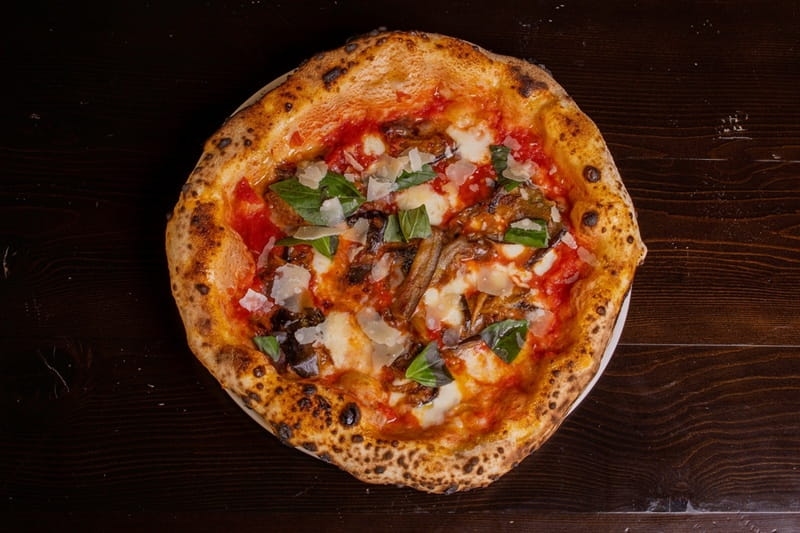
Before we get into the details, here’s a quick roadmap of what we’ll cover. We’ll start with what makes authentic Neapolitan pizza so special and why traditional pizza in Naples still sets the gold standard. Then we’ll break down the Neapolitan pizza dough recipe, step by step, and talk about classic pizza-making techniques, including wood-fired pizza, Italian style. After that, we’ll shift to modern twists that American chefs love, from creative toppings to home oven hacks. By the end, you’ll see how old-world craft and new-world creativity can live happily on the same crust.
If you’ve ever taken that first bite of authentic Neapolitan pizza and paused, just for a second, you know what I mean. The crust is soft yet airy, the center is tender, and the toppings taste bright and clean. It feels simple. It is simple. And yet it’s not.
Traditional pizza, Naples style, began as humble street food. In Naples, pizza was never meant to be overloaded. It was quick, hot, and honest. That philosophy still defines it today.
Traditional pizza in Naples grew out of working-class neighborhoods. Bakers used basic ingredients that were easy to find and affordable. Flour, water, salt, yeast. Tomatoes from nearby fields. Fresh mozzarella. Basil from the garden.
And here’s the thing. The simplicity is the point.
When you limit the ingredients, every element has to shine. There’s nowhere to hide. If the dough is off, you taste it. If the tomatoes are bland, you notice. That honesty is what makes authentic Neapolitan pizza so respected, even in American kitchens from Brooklyn to Los Angeles.
There are clear standards around what qualifies as authentic Neapolitan pizza. The dough must be hand-stretched. The bake time is short. The oven is blistering hot. The crust should puff up around the edges, with charred spots known as leopard spotting.
Let me explain something important. If toppings are the personality, the dough is the soul. The Neapolitan pizza dough recipe looks almost too basic at first glance. But don’t be fooled. This is where real pizza-making techniques begin.
Keep it clean. Keep it simple.
That’s it. No sugar. No oil. No shortcuts.
That slow fermentation is magic. It builds flavor and gives the crust its airy structure. Honestly, rushing this step is like skipping the marinating time on a great steak. You can do it, but you’ll miss something special.
Traditional pizza, Naples style, never uses a rolling pin. Press the dough gently from the center outward, leaving the edges thicker. Gravity helps. Your hands guide it.
This technique keeps the air bubbles intact. That’s what creates the light, puffy rim.
Now we get to the fire. Literally.
A wood-fired pizza oven in Italy reaches temperatures around 800 to 900 degrees Fahrenheit. That intense heat cooks the pizza in about 60 to 90 seconds. It’s fast. It’s dramatic. It’s beautiful to watch.
The high heat does two things:
That char isn’t burnt in a bad way. It’s balanced. Slight bitterness meets sweet tomato and creamy cheese.
Most American homes don’t have a brick oven in the backyard. However, some pizza fans do install brands like Ooni or Gozney for that authentic feel.
If you’re using a home oven:
You won’t hit true wood-fired pizza Italy temperatures, but you can get close enough to capture some of that magic.
Now let’s talk toppings. Authentic Neapolitan pizza keeps it restrained. The classics still dominate menus across Italy and in serious pizzerias across the US.
For a traditional Margherita, you’ll need:
For Marinara, skip the cheese and use:
That’s it. No heavy sauce. No mountain of cheese.
Here’s where things get interesting. American pizza culture loves experimentation. And that’s not a bad thing.
You’ll see:
It’s a gentle contradiction. We respect authentic Neapolitan pizza, yet we also want to make it our own. That tension actually keeps pizza culture alive.
So what really separates a decent pie from a memorable one? It comes down to refined pizza-making techniques.
Less is more. Spread a thin layer of crushed tomatoes in a spiral motion. Leave a border around the edge.
Too much sauce weighs down the center. Too little makes it dry. It’s a balance you feel over time.
Tear fresh mozzarella by hand. Scatter it evenly. Don’t blanket the surface.
When it melts, it should create pockets of creamy richness, not a heavy layer that slides off.
Authentic Neapolitan pizza remains a benchmark for simplicity done right. From the careful fermentation of the dough to the blazing heat of wood-fired pizza ovens, every step has purpose. Traditional pizza, Naples style, teaches us restraint. It reminds us that flour, water, tomatoes, and cheese can create something extraordinary.
At the same time, modern variations keep the craft evolving. American chefs and home cooks borrow core pizza-making techniques and adapt them to local tastes and seasonal trends.
Authentic Neapolitan pizza uses simple ingredients, hand-stretching, and very high heat baking. The crust is softer and more airy than typical American pizza.
Yes, you can use a home oven with a pizza stone or steel. While it won’t reach true wood-fired pizza Italy temperatures, you can still achieve great results.
00 flour is preferred because it creates a soft, elastic dough. It helps produce the light and tender crust associated with traditional pizza, Naples style.
Classic toppings include San Marzano tomatoes, fresh mozzarella, basil, olive oil, garlic, and oregano. The focus is always on freshness and balance.
This content was created by AI